Showing posts with label Movement. Show all posts

Friday, September 15, 2017

Love Will Keep Us Together

Another one of my favorite Randy DeLelles and Jeff Kriske activities uses the classic song, "Love Will Keep us Together," by Captain and Tennille. I got this lesson from an ASOA conference I went to years ago and my students always really enjoy it. 

I start out by having the students practice walking to the beat of a drum in scattered formation. We talk about the importance of walking in unique pathways and not just walking in a counterclockwise circle as is a tendency. Next, we practice walking sideways and backwards to the beat and then we add simple repetitive arm movements. 

At this point, I have students form groups of 5 with the person at the front of the line assigned as the leader. The leader begins walking to the beat doing some kind of simple locomotor movement and the rest of the group follows, copying the motions of the leader. To take turns, I have the leader rotate to the back and the next person in line has an opportunity to lead. 


This can be added to the verses of "Love Will Keep us Together." I also teach this simple choreography to the refrain of the song:


And also you can add a simple pat/clap pattern on the B section and put all of it together for a final performance:


This lesson is great for the end of the year when the kids really need to get up and moving a lot or of course it is appropriate for Valentine's Day. Here are a few pictures of the students in action:


Thursday, February 2, 2017

The Tissue Dance

Kindergartners have been learning about different ways to move to music. We've used many different props such as scarves, streamers, and beanbags to experiment with locomotor and non-locomotor movement. In order to practice expressive movement, I used this activity from True Aim: The Blue Manor Blog called "The Tissue Dance." According to their blog post, the original idea came from the book called, Circle Time Activities by Nancy Alexander.

Since we had been singing songs about winter and snow, we talked about what snowflakes look like when they move (slowly, delicately, floating, etc.) and used it for inspiration for our version of the game. The students each received a tissue and had to try to keep the tissue on their head while they moved around the room to the wintery music. First, we just practiced moving and then we turned it into an elimination game - if their tissue fell off their head they were out of the game. After we finished the game, we balled up out tissues and threw them like snowballs. They really enjoyed it and I wish I had gotten a picture of that! :)


Monday, October 26, 2015

Tennis Ball Rhythms

To go along with our Rhythm unit, 4th and 5th graders have been talking about subdividing and how music note values are related to fractions.


Classes have really enjoyed this tennis ball rhythm activity! Each note has a different movement that goes with it to represent that note value. It helps to reinforce steady beat, how the notes are related to each other, and how they fit in the measure. Here are some pictures of the students practicing:


Whole Note: tennis ball goes around the body in a large circle for 4 counts
Half Note: bounce tennis ball for 1st count and catch ball for 2nd count
Quarter Note: toss the tennis ball up and catch on each beat
Eighth Notes: toss the ball back and forth between each hand on each half beat

You can find this activity here on YouTube:


(In addition to "Stars and Stripes," I have the students try the activity with a variety of styles)

Friday, October 2, 2015

Oh Opposites!

First graders at HSES have been working on a musical opposites unit! They have learned about loud/soft (quiet), fast/slow, high/low, and long/short. They have had so much fun doing various games and activities to help them identify these changes in music. Here are a few pictures of our fun...

After hearing a fast/slow story about a school bus, students move their buses fast and slow to the music.
After learning about fast and slow music, students participate in a quick check assessment.
Learning about loud and soft -  boys pretend to be grizzly bears hibernating


... and wake up when the song gets loud!

And then the girls get to be the grizzly bears!
So. Much. Fun! :)
Using scarves as paintbrushes - painting long and short sounds
Using sticks to play "violins" when they hear long sounds...
... and playing "drums" for short sounds.
Pretending scarves are taffy - stretching them out to long sounds.

Friday, November 21, 2014

Alabama Gal

Alabama Gal... what a fun song! Our fifth graders have really enjoyed learning this piece. After we learned the 4 verses, we added a fun line dance!


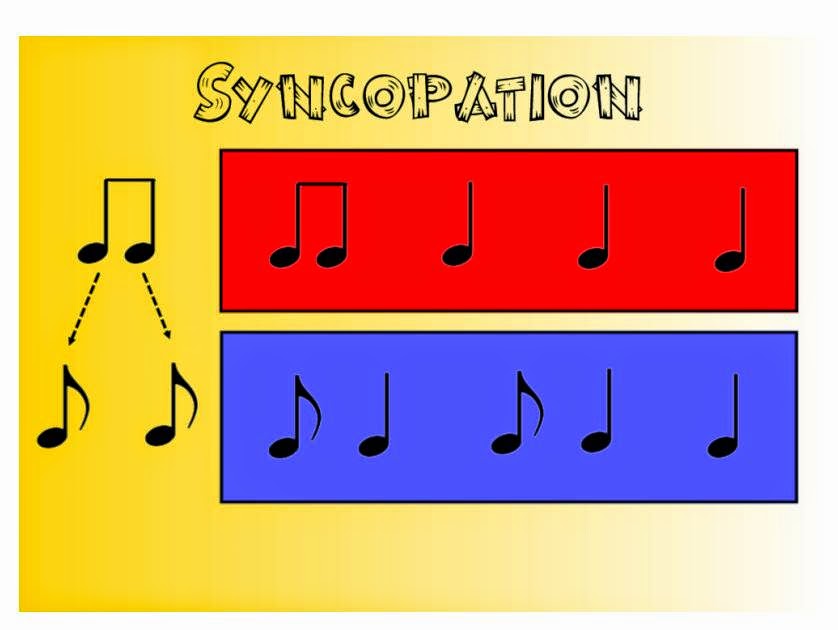
I also used this song to talk a little with them about syncopation.


Then, I challenged the students to figure out the melody to the song on their own. They worked with a partner and after being given the starting pitch, they were off! Once they discovered the melody and had a chance to practice, we created a performance including some dancers.


Great job, fifth graders! :)

Here is an Orff accompaniment that we might try after Thanksgiving break written by one of my favs, Deanna Stark. She has some GREAT free resources on her website: http://deannastark.weebly.com/

Thursday, September 25, 2014

Learning about Long and Short

First grade students are finishing up a unit on musical opposites. The last two opposite words they have been learning about are long and short. They discovered that long and short sounds can be made into patterns that create rhythms! Here are a few of the ways they experienced long and short sounds:

Students put these pictures into the correct category according to the kind of sound it made:


They really enjoyed using scarves to help show long and short. They pretended their scarf was a paintbrush and they painted long or short strokes as they listened to the "Long and Short Dance" (from the Share the Music curriculum).


Students used rhythm sticks to show long and short as well. As they listened to music, they used their rhythm sticks like drum sticks on the floor if they heard short sounds...


And pretended to play violins if the sounds were long...


Then, we read the book, Otto Goes to the Beach, by Todd Parr:


 In the story, Otto is having a really rough day and they hear the repeated phrase, "Poor, Otto!" 


The students quickly discovered that the word "Otto" has two short sounds and "Poor" has a long sound!


With our own dog pictures, we created patterns on the board with long and short sounds such as "Poor, Poor, Otto, Poor."


Then, they worked with a partner to create and perform their own patterns.


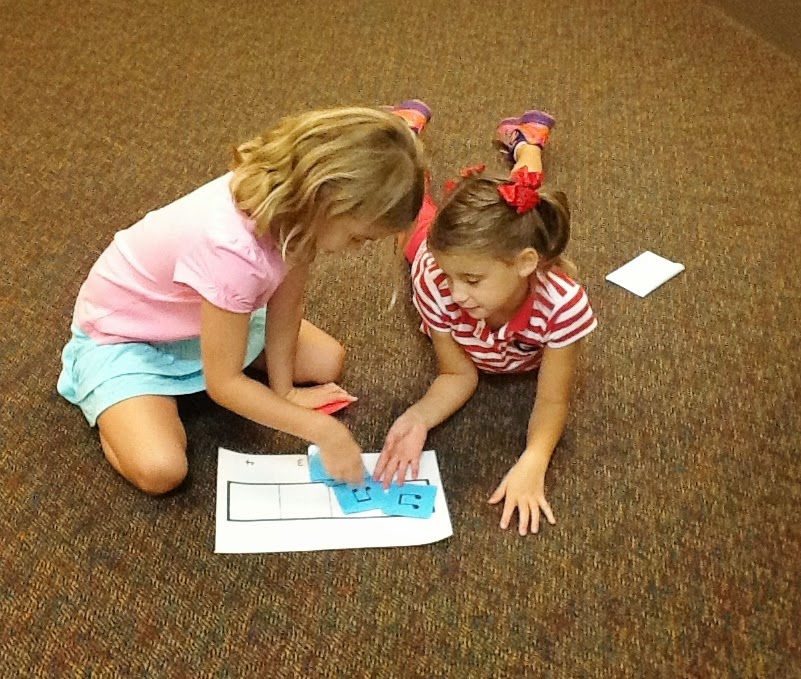
Finally, the students were introduced to the real musical symbols: the quarter note (long sound) and eighth notes (short sounds). They were able to make patterns with the newly learned symbols, otherwise known as "tah" and "ti-ti."


Next up... rests! Stay tuned for more rhythm work in 1st grade music! :)